
Various types of lighting control systems are available for commercial and residential use. Most of these offer easy installation in new or refurbished buildings. With lighting control systems, you can customize your lights based on specific needs and settings. The key benefits of these systems are energy conservation, enabling users to lower their utility bills.

Whether you need lighting control systems for commercial or residential use, it’s essential to understand their various types. This article describes these systems, the types in which they come, and their advantages. Keep reading to learn more.
What is Lighting Control System? – An Overview
Different types of lighting control systems exist, but what are they to begin with? Lighting control systems are devices that adjust the light intensity and color temperature of a given area.
When they receive a signal, they determine the extent to which they should adjust the lighting. This way, users can customize their lighting based on their needs and goals, including energy conservation.
Lighting control systems have various parts, including the control unit. This unit is the core of any of these devices. Its work is to decide what the lighting sources should do based on signals from input components. Input components entail switches and sensors.
Their work is to relay data to the control unit in real-time. Output components execute the commands from the control unit. They can dim, switch on or off, or tune the lighting fixtures. Another crucial part of a control lighting system is the communication path.
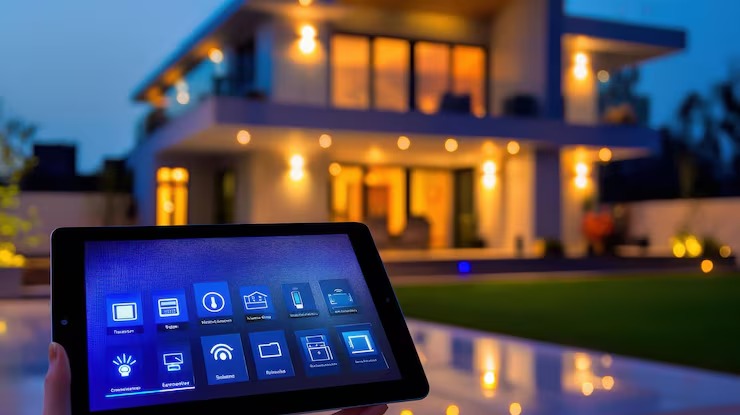
It enables the control unit and the output components to exchange instructions. Lastly, the systems consist of a user interface with various touch panels, mobile apps, and other essential features. The UI enables human users to interact with the system and customize their lighting preferences.
Types of Lighting Control Systems – Six Options
Many types of lighting control systems exist. By learning their specific features and pros, you can select the most suitable choice for your space and needs. Here are the key options:
- Manual
Although manual types of lighting control systems are old-fashioned, they are still in use. Like other manual systems, these are simple lighting control devices offering direct hand operation. For instance, you need only press a switch to turn your lights on or off. You can twist a knob or turn a dial to activate your manual lighting control system. They fit traditional data centers that follow a routine.
- Dimming
Some types of lighting control systems enable you to reduce the light intensity if full brightness is bothersome. These are called dimming systems. These are best commercial lighting control systems for workplaces that use lights to create a suitable ambiance. They are also perfect for your home office or study room, as you can choose the best light intensity for your eyes.
- Clocks or Time-based
Did you know that clock or time-based types of lighting control systems can determine when the lights can switch on or off? Once preset that way, they will operate flawlessly. Good examples of clock-based lighting controls are streetlights.
They automatically switch on at sunset and off at dawn. In manufacturing plants or companies that have fixed work hours, time-based control systems can be beneficial. They are energy-efficient because they operate when necessary.
- Occupancy Sensor
Most types of lighting control systems use sensors as input devices. These are perfect for commercial spaces such as restrooms and meeting rooms. Occupancy sensors often activate the lights when users enter the room, making them energy efficient and reliable when looking to lower costs.
Some of them use passive infrared heat to detect presence, while others use dual technology. You can install occupancy sensors in areas with unpredictable foot traffic.
- Photosensor
This lighting control mechanism traps sunlight. Photosensors measure ambient daylight to adjust our artificial lights accordingly. If a room has enough daylight, the photosensor will keep the artificial lights off and vice versa. Photosensors help users conserve energy and lower their utility bills.
- Smart and Wireless
Some of the smartest types of lighting control systems are wireless devices. These are more flexible and aesthetically pleasing than wired control systems. Besides, they are easy to install even in old-fashioned properties with cumbersome wiring.
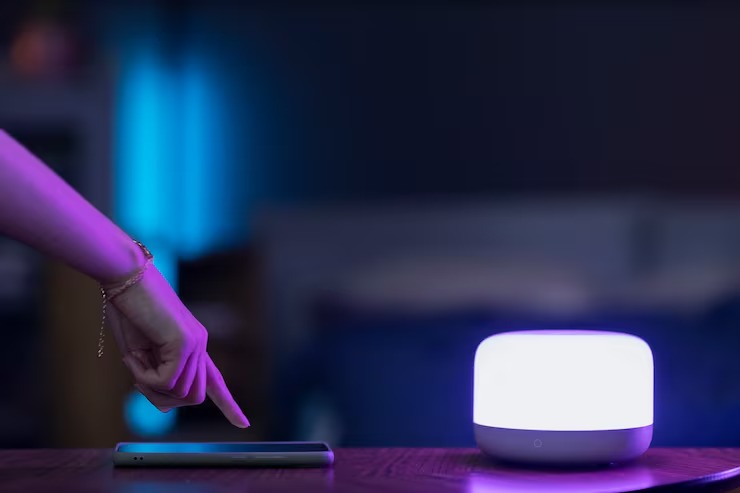
These types of lighting control systems are perfect for home use. One of these is just a wireless light bulb you can attach to an existing fixture. Connected to an app that controls it via a tablet or smartphone, a smart bulb operates independently.
You will often find it in an accent light or other modern lamps. It connects to a smart appliance wirelessly via Bluetooth or Wi-Fi, and it is dimmable. You can also get smart downlight devices that produce varying white lighting or colored illumination. These types of lighting control systems are ideal for the ceiling area.
Smart downlights require wire connections like other ordinary lights. The difference between them and other ceiling lights is that you can switch them on or off via your tablet, AI speaker, or smartphone. They can work alone or with other smart lights, and they are dimmable.
Other smart lighting control systems include smart LED strip lights. When you need lights that set just the right mood, these are ideal choices. For instance, you can accentuate a piece of art in your house or highlight a border with these.
You can customize their sizes and attach them to most surfaces. Once installed, you need to plug them into the main power to use them. Smart LED strip lights offer app control on your smartphone, AI speaker, or tablet.
Offering varying lengths, multiple colors, and connectivity options such as Bluetooth and Wi-Fi, smart LED strip lights are perfect for creating the right atmosphere in your rooms. Other options include smart PIR security lights, light switches, and outdoor lights.
Lighting Control Systems Benefits
Why should you install one of the best types of lighting control systems? These systems offer some unique benefits you would like to experience. Here is an outline:
- Achieves Energy Efficiency – Homeowners and commercial building users want to conserve energy and run their properties more efficiently. Lighting control systems make this goal achievable via devices like motion sensors. They will ensure the lights stay off when nobody is occupying a room or when the illumination from natural light is adequate. Different types of lighting control systems aim to reduce energy wastage, allowing the user to lower their utility bills.
- Enable Lighting Customization – Whether in residential or commercial settings, users have unique lighting needs. One way to tailor your lighting to your needs is to get one of these control systems. These control systems can improve how your lights function and boost aesthetics. With its broad customization options, you can configure your lighting fixtures to offer the intensity you want.
- Alter Color Temperature – Apart from regulating the lighting intensity, various types of lighting control systems also adjust the color temperature of the lights. Lighting fixtures with perfect color temperature can enhance your mood, alertness, cognition, visual comfort, and productivity. Thus, these systems can help improve human health and efficiency in workplaces.
- Improves Integration – With modern types of lighting control systems, workplaces and homes can integrate lights with other systems, including CCTV security appliances and HVAC. If you integrate lighting controls and other systems well, they will work as a team and communicate efficiently to enhance your individual experiences and comfort. As integrated systems increase energy efficiency and sustainability, you can potentially enjoy tax benefits and perks.
Final Word
Modern types of lighting control systems can produce real-time data and metrics on energy consumption. With their heat mapping technology, the systems can reveal less efficient areas within a building.
This can enable the facility manager to address the matter immediately. They can also identify faults that may cause downtime, enabling technicians to perform repair and maintenance tasks quickly.