
One term you might come across frequently if you work with building security is commercial building access control systems. However, what does it imply, and why is property protection so important? Any complete business security system must have access control, which is essential for deciding who may enter your property and what areas they can access once they are there.

Access control systems, whether they take the form of a basic lock-and-key system or a more sophisticated biometric scanner, are intended to stop unwanted entrance and protect critical locations inside your structure. We will go over what access control is, how it functions, and why it is crucial to preserving the integrity and security of your business environment in this post.
What is a Commercial Building Access Control System?
In short, a commercial building access control system is a system that regulates who may enter and access different parts of a facility. You can use several things, like Turnstiles, cards, PIN numbers, or biometrics like fingerprints or face recognition, to access such a building.
Building owners can restrict physical access to all or partial portions of their buildings by using access control systems in an office building security system. This adds another layer of protection to safeguard both the building and its occupants.
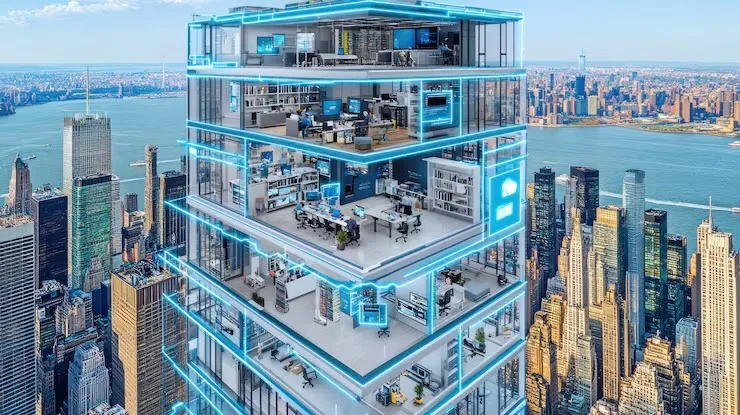
Commercial buildings come in a variety of sizes and forms, such as skyscrapers housing business offices and multi-tenant high rises. Its goal is to safeguard the basic structure, which comprises the tenant space, utility closets, common areas, and entryways.
Features of Commercial Building Access Control System
A comprehensive approach to access control must include strong building security. There are several aspects to consider while putting in place a building security system. Among them are:
Intrusion Detection Systems
Systems for detecting intrusions are used to keep an eye on certain parts of a structure. Therefore, if an alarm goes off during off-peak hours, a central station can monitor it and send out police or other emergency services.
Intrusion detection systems allow for the monitoring of alarms throughout a facility and the communication of those alerts to a central station during off-peak hours. The central station may then send out emergency personnel as necessary.
Analytics
Additionally, physical security systems may give building owners useful statistics. By displaying how renters use the facility, this data may help landlords better manage personnel and sanitation services throughout the building.
Elevator Access Control
Elevators can be secured in several ways, such as more contemporary techniques like destination dispatch, in which a tenant or guest visits a kiosk to validate and is then guided to a particular cab to access a desired floor, or more conventional techniques like card readers inside the cab to unlock floors.

Types of Access Control System
For business facilities, choosing the right access control system is crucial to protecting property, directing traffic, and adhering to rules. These days, companies of all sizes need their networks to be flexible and secure. Access control systems for workplaces and enterprises come in a variety of forms.
Card and Key Fob
This is a common door access control system for businesses. They can unlock doors and access elevators by using cards or key fobs that have been programmed with access credentials. These systems often make use of RFID technology, which enables the card or fob to interact wirelessly with a door reader to open it.
Although key fob systems are convenient, there is a chance that the fobs can be misplaced or stolen. As a result, it is critical to maintain and update the system on a regular basis to guarantee that only those with permission may access regions.
Mobile access control systems
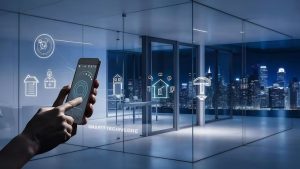
Since it enables tenants to unlock doors directly from their mobile devices, a mobile access control system is an excellent investment for a business or office. Devices such as Apple Watches, iPads, and smartphones become quick access credentials.
The fact that you no longer need to program fobs or provide physical credentials may be the biggest advantage for property employees. You only need to control access rights from a cloud-based dashboard because tenants utilize their own devices.
Biometric Access Control
These systems employ biometrics, such as fingerprints or facial recognition, to confirm users’ identities and offer access. The need for real credentials is eliminated by this higher level of security, which adds an additional layer of defense that is difficult to replicate or breach.
Commercial Video Intercom Systems
Real-time video communication is combined with access control in commercial video intercom systems. To enable building employees or residents to visually confirm or authenticate themselves before entering, these devices are frequently put at entrances.
Furthermore, video intercoms may be connected to access control systems so that renters can use mobile applications to remotely open doors even while they are not in the building.
Benefits of a Commercial Access Control System
You can replace antiquated locks and keys with an affordable, straightforward keyless entry system by investing in a business access control system. Tenants, building owners, and property managers can all profit greatly from commercial access control. Here are the key benefits of commercial building access control systems
Increased building safety
A business access control system is an advanced physical security system that enables you to close doors without denying tenants’ access. Additionally, some systems come with an integrated camera that may capture a picture each time a person enters the facility to provide an audit trail.
Connect to additional systems
Google Workspace is just one example of how many companies’ access control systems interface with other intelligent software and tech solutions. By consolidating all your activities on a single platform, you may reduce the amount of work that is required.
Give up the trouble and cost of conventional keys
Renters frequently misplace their keys. Additionally, building employees must devote time and money to replacing the lock and giving each renter a new key when someone misplaces one. Mobile credentials are an excellent substitute.
Choosing the Best Commercial Building Access Control Systems
The size of your facility, the demands of the business, your financial constraints, and safety regulations should all be taken into consideration when choosing the appropriate access control for commercial buildings. Verify the system’s compatibility with your existing security measures, such as alarm systems and security cameras.
Make future enhancements and scalability your top priorities to ensure that the project will continue to be beneficial over time. Selecting a trustworthy business that understands your firm and will manage all your setup, direction, and support is essential. An effective access control system helps you comply with rules, increases security, and enhances access.
Emerging Technology in Commercial Access Control Systems
The technology utilized in access control systems has changed along with security requirements. These days, a lot of commercial buildings are using face recognition, AI-driven systems, and interaction with other smart building technologies. By offering real-time analytics, remote monitoring, and more exact control over who may access regions, these advancements improve security.
For instance, facial recognition technology may be incorporated into current security systems to enable authorized staff to enter without difficulty while promptly identifying illegal persons. Analytics powered by AI may also identify anomalous access patterns and notify security personnel of possible breaches.
Conclusion
The appropriate commercial building access control systems increase productivity, reduce potential security risks, and restrict access to those who are permitted in key areas. Businesses must aggressively safeguard their employees, assets, and data due to increased hazards and technological advancements. The right solution links seamlessly with your total security systems in addition to providing security for your property.